
OVERVIEW :
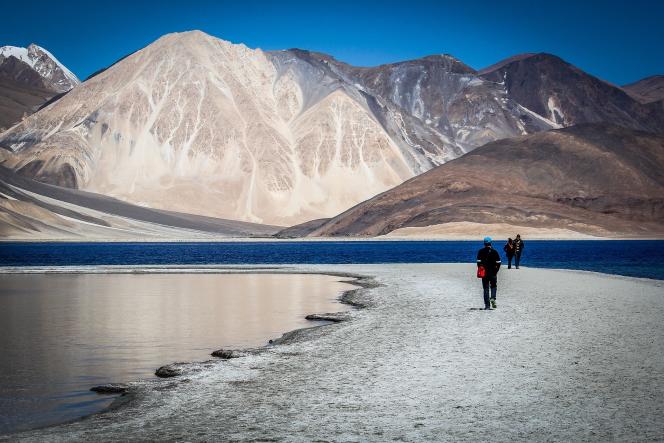
Ladakh, union territory of India, located in the northern part of the Indian subcontinent in the vicinity of the Karakoram and westernmost Himalayan mountain ranges. It is bounded by Jammu and Kashmir union territory to the west and by Himachal Pradesh to the south; its northern and eastern borders are disputed with Pakistan and China, respectively. Ladakh was administered as part of Jammu and Kashmir state from 1947 until 2019, when it became a separate administrative unit. Area 22,836 square miles (59,146 square km). Pop. (2011) 274,289. Geologically complex and topographically immense, the Great Himalayas contain ranges with numerous peaks reaching elevations of 20,000 feet (6,100 metres) or higher, between which lie deeply entrenched remote valleys. Running parallel to the main Great Himalayas directly to the east is the Zaskar Range, which begins its flank from the main range at the Karnali River to the southeast of Ladakh. The zone was heavily glaciated during the Pleistocene Epoch, and remnant glaciers and snowfields are still present. The mountains constitute a climatic divide, representing a transition from the monsoon climate of the Indian subcontinent in neighbouring Jammu and Kashmir to the dry continental climate of Central Asia and Tibet. The valley of the upper Indus River is a well-defined feature that follows the geologic strike (structural trend) westward from the Tibetan border to the point in the Pakistani sector of Kashmir where the river rounds the great mountainous mass of Nanga Parbat to run southward in deep gorges that cut across the strike. In its upper reaches the river is flanked by gravel terraces; each tributary builds an alluvial fan out into the main valley. The town of Leh stands on such a fan, 11,500 feet (3,500 metres) above sea level, with a climate characterized by an almost total lack of precipitation, by intense insolation (exposure to sunlight), and by great diurnal and annual ranges in temperature. Life depends on meltwater from the surrounding mountains, and vegetation is alpine (i.e., consists of species above the tree line), growing on thin soils.


