
OVERVIEW :
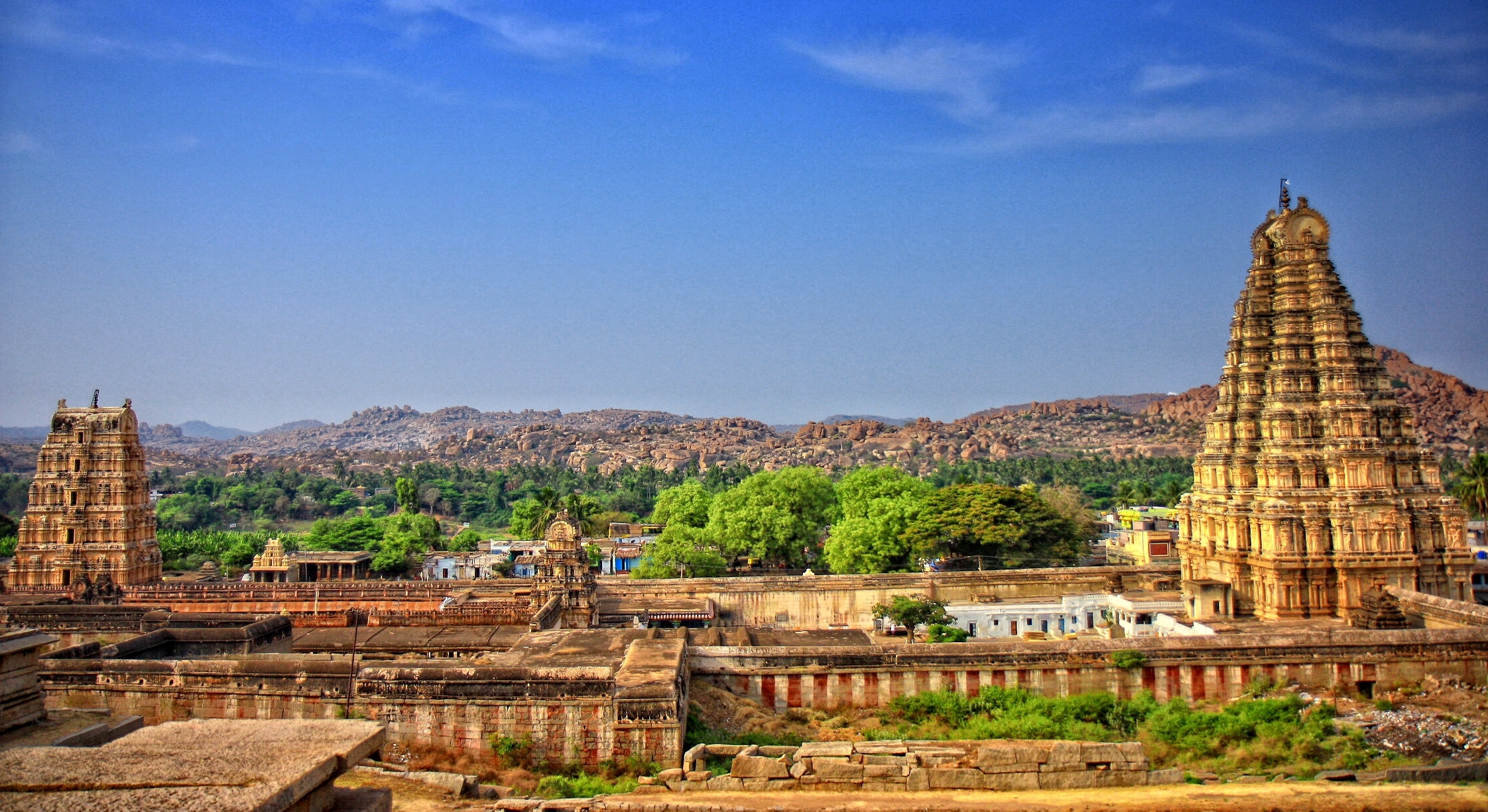
The austere, grandiose site of Hampi was the last capital of the last great Hindu Kingdom of Vijayanagar. Its fabulously rich princes built Dravidian temples and palaces which won the admiration of travellers between the 14th and 16th centuries. Conquered by the Deccan Muslim confederacy in 1565, the city was pillaged over a period of six months before being abandoned. The austere and grandiose site of Hampi comprise mainly the remnants of the Capital City of Vijayanagara Empire (14th-16th Cent CE), the last great Hindu Kingdom. The property encompasses an area of 4187, 24 hectares, located in the Tungabhadra basin in Central Karnataka, Bellary District. Hampi’s spectacular setting is dominated by river Tungabhadra, craggy hill ranges and open plains, with widespread physical remains. The sophistication of the varied urban, royal and sacred systems is evident from the more than 1600 surviving remains that include forts, riverside features, royal and sacred complexes, temples, shrines, pillared halls, Mandapas, memorial structures, gateways, defence check posts, stables, water structures, etc. Among these, the Krishna temple complex, Narasimha, Ganesa, Hemakuta group of temples, Achyutaraya temple complex, Vitthala temple complex, Pattabhirama temple complex, Lotus Mahal complex, can be highlighted. Suburban townships (puras) surrounded the large Dravidian temple complexes containing subsidiary shrines, bazaars, residential areas and tanks applying the unique hydraulic technologies and skilfully and harmoniously integrating the town and defence architecture with surrounding landscape. The remains unearthed in the site delineate both the extent of the economic prosperity and political status that once existed indicating a highly developed society. Dravidian architecture flourished under the Vijayanagara Empire and its ultimate form is characterised by their massive dimensions, cloistered enclosures, and lofty towers over the entrances encased by decorated pillars. The Vitthla temple is the most exquisitely ornate structure on the site and represents the culmination of Vijayanagara temple architecture. It is a fully developed temple with associated buildings like Kalyana Mandapa and Utsava Mandapa within a cloistered enclosure pierced with three entrance Gopurams. In addition to the typical spaces present in contemporary temples, it boasts of a Garuda shrine fashioned as a granite ratha and a grand bazaar street. This complex also has a large Pushkarani (stepped tank) with a Vasantotsava mandapa (ceremonial pavilion at the centre), wells and a network of water channels.


